
Implementation
Digitise what you do now. Then improve, fast.
EXTAG starts with one asset class and the way your people already work. Implement in weeks, not months: a working solution is in front of real users within weeks, and one asset class proves the model.
A bottom-up approach, not a big-bang rollout
Traditional rollouts plan everything up front, build it, then roll it out, and users see it last. EXTAG digitises what you currently do first, then iterates often and fast with the people who use it, so engagement stays high.
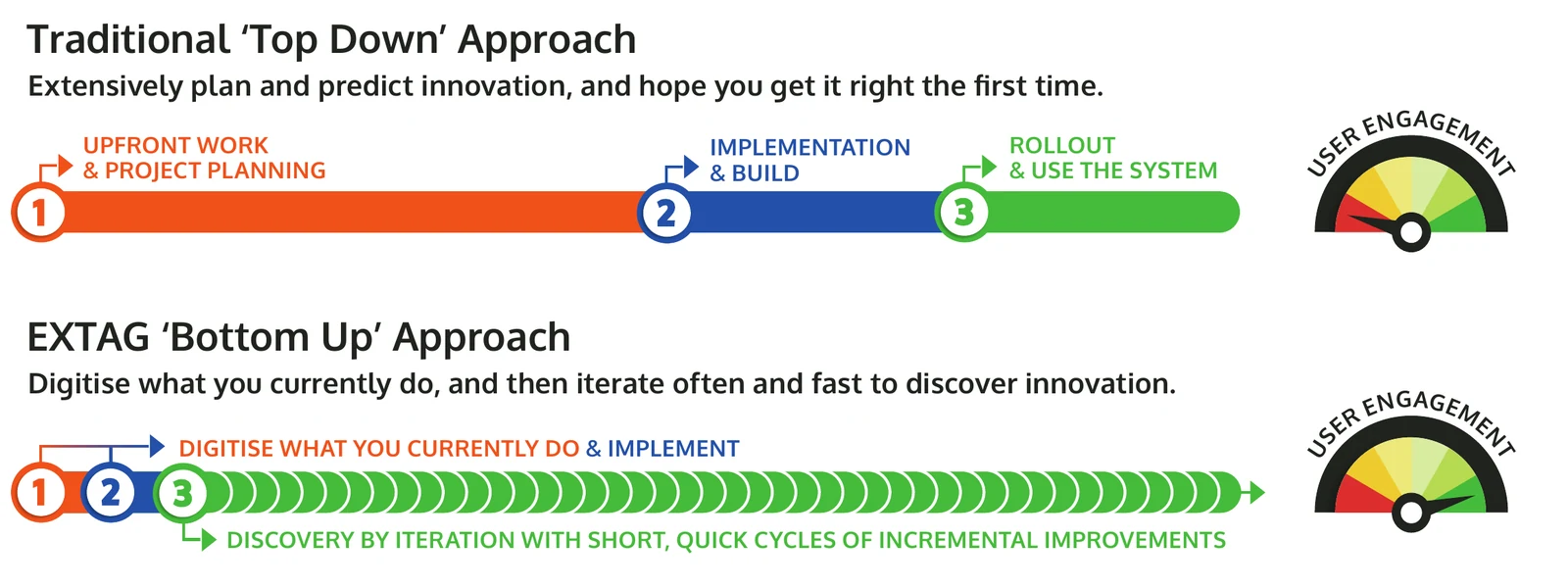
- Implement in weeks, not months. One asset class proves the model.
- Real users within weeks. A working version in use, not a specification.
- Days, not months. Ideas for improvement implemented quickly.
Why not a traditional rollout?
In a phased waterfall delivery, every requirement is designed and signed off before users see anything. Each phase is built, tested and goes live in sequence, and improvements after go-live become change requests, with cost, delay and a queue. Risk concentrates at sign-off and at every go-live.
How EXTAG delivers
Start with one asset class. Import existing data, create the real actions your users perform, iterate with them in the field, build reports on proven data, then formally accept. The remaining asset classes repeat the same cycle in parallel, and faster, and the cycle keeps running after go-live.
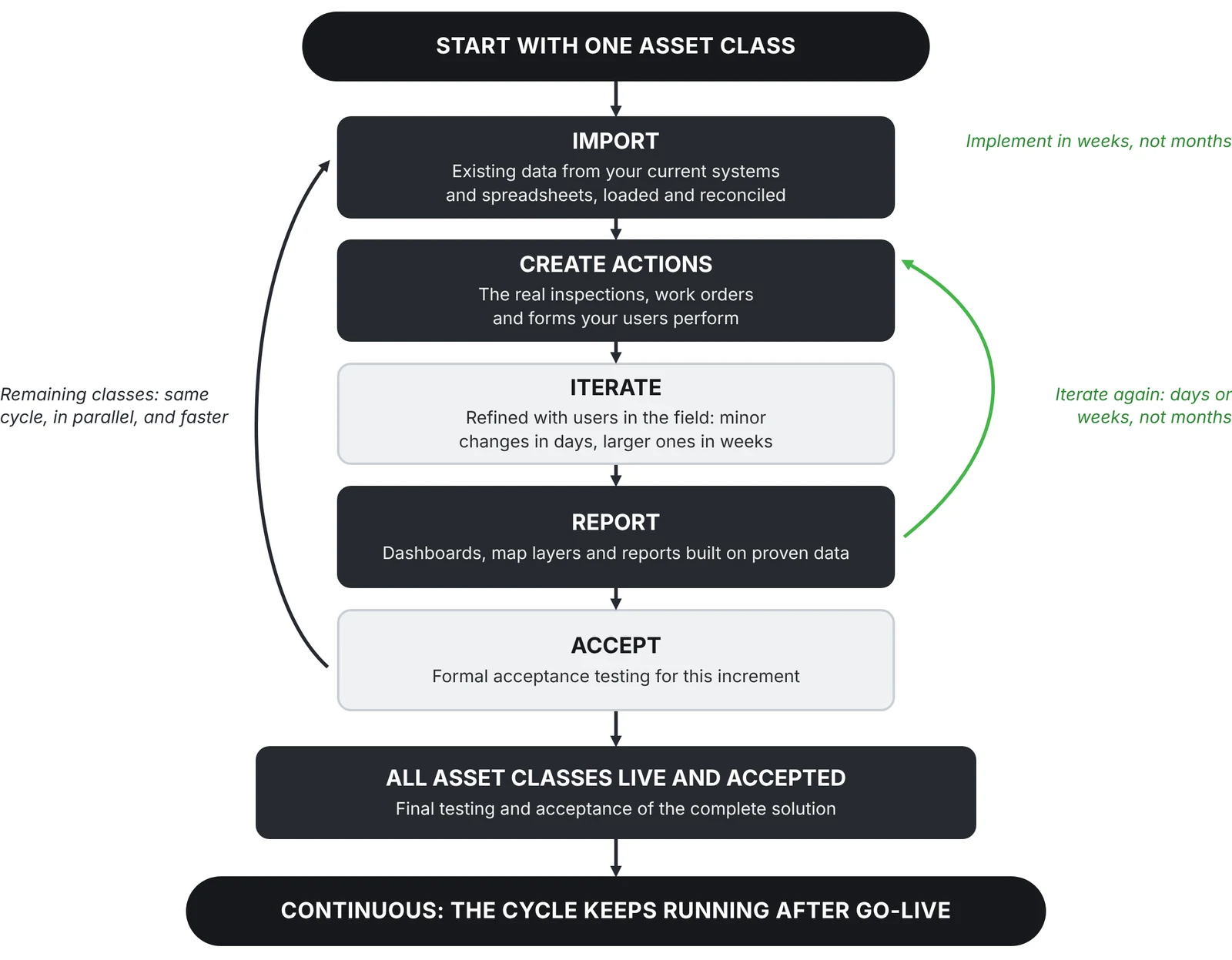
What the first asset class looks like
- 1
Objectives and people
Agree what success looks like and who needs to be involved: the people doing the work, supervising it and reporting on it.
- 2
Provide your data as it is
Hand over existing registers, spreadsheets and system extracts as they are. No clean-up is needed before we start.
- 3
Understand the work in the field
We see how the work is really done, so tags, forms and tasks match what field users do and how it feels to capture it.
- 4
Identify the reporting needed
Work out the questions you need answers to, and what data has to be captured to answer them.
- 5
Cycle back and refine
Review what is being captured with your users and refine the forms and rules as you go, rather than from a long specification.
- 6
Working version in use
A working solution is in front of real users within weeks, capturing real data on real assets.
- 7
Review and iterate
Review results and iterate until every objective is met. The proven pattern is then applied to the next asset class, faster each time.
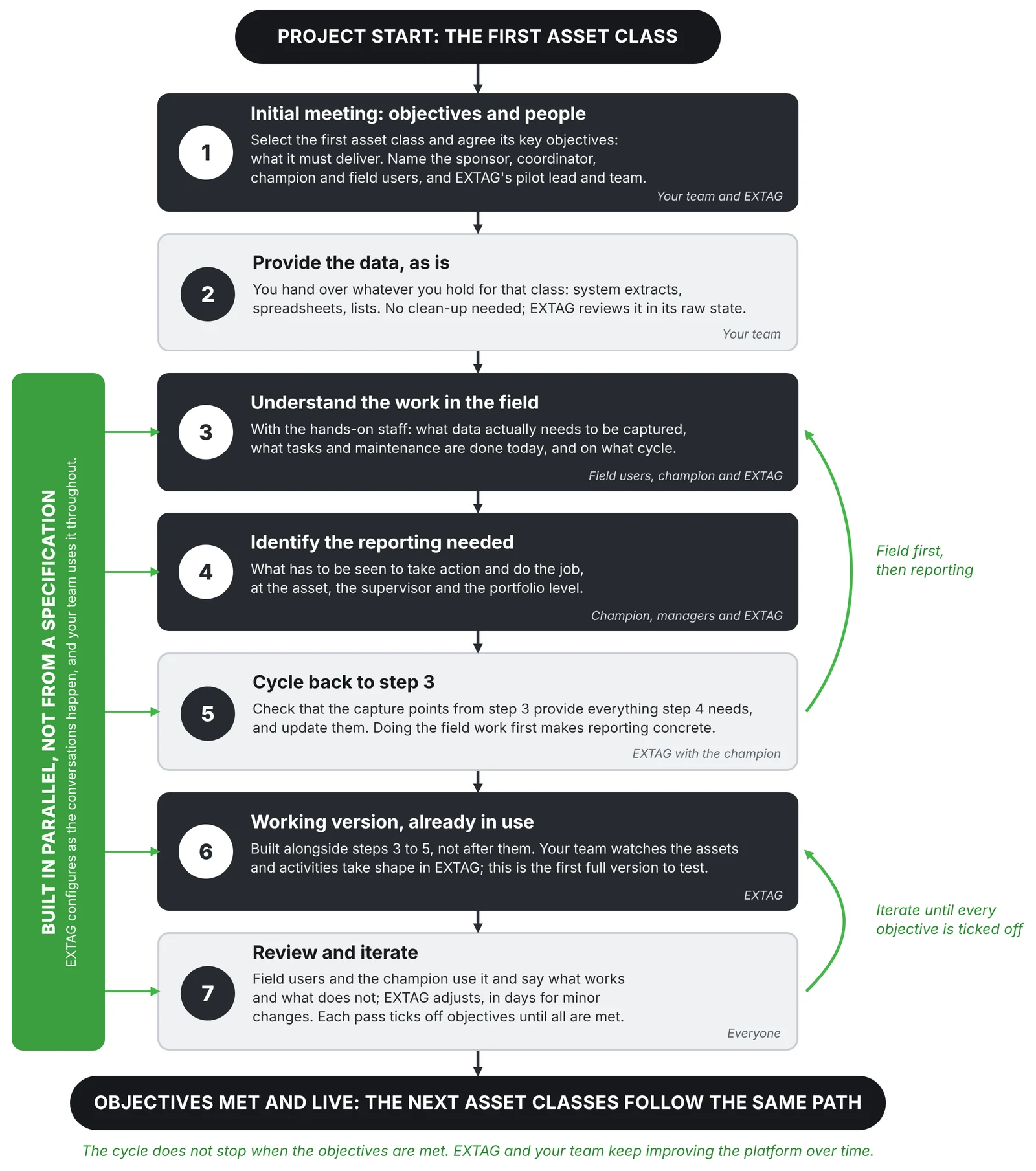
Data first, reporting second
Get the field data real and trusted first: existing records imported and reconciled, field capture for each asset class, inspections and maintenance on their real cycles, and integrations with identifiers kept so records stay matched. Then build reporting on top, your business logic, embedded Power BI reports and maps, on data people already trust.
Proof point
Auditable valve compliance without spreadsheets
Valve maintenance and certification provider, WA resources sector: real users within weeks and, for this customer, in full use at the 3-month mark, with a 42% improvement in quality control and operational tasks (about 8 hours saved per job).
Read the case studyWhat you provide
You do the thinking, we do the building. We need a sponsor, a champion for each asset class, a few hours a week from field users, and someone who knows where the data lives and can introduce us to your IT contact. Everything else is ours: EXTAG configures the tags, forms, workflows and reports.
Pilot first, then roll out
Prove one asset class first, then roll the proven pattern out to the remaining classes in parallel, each one faster than the last. Users see a working version early, and every class after the first reuses what has already been proven.
Bring your data as it is
You do not need to clean up your data first. We profile, cleanse and reconcile your registers, spreadsheets and system extracts, and load them. Your original identifiers, such as the ERP asset number, stay on each record so records stay matched. Asset master data and active records are migrated, and structured history is migrated where it fits, with the rest kept as reference documents. Details are verified in the field as tags are attached.
Training and adoption
Most users learn from the person next to them. Training is built into the rollout, not left to the end, and it follows the role.
- Administrators learn to manage users, templates and reports.
- Editors and readers learn to complete forms and use maps, dashboards and reports.
- Read-only users learn to find what they need.
- Restricted users only scan a tag to report a problem.
Recorded walkthroughs, quick-reference guides and electronic user guides are available for every role.
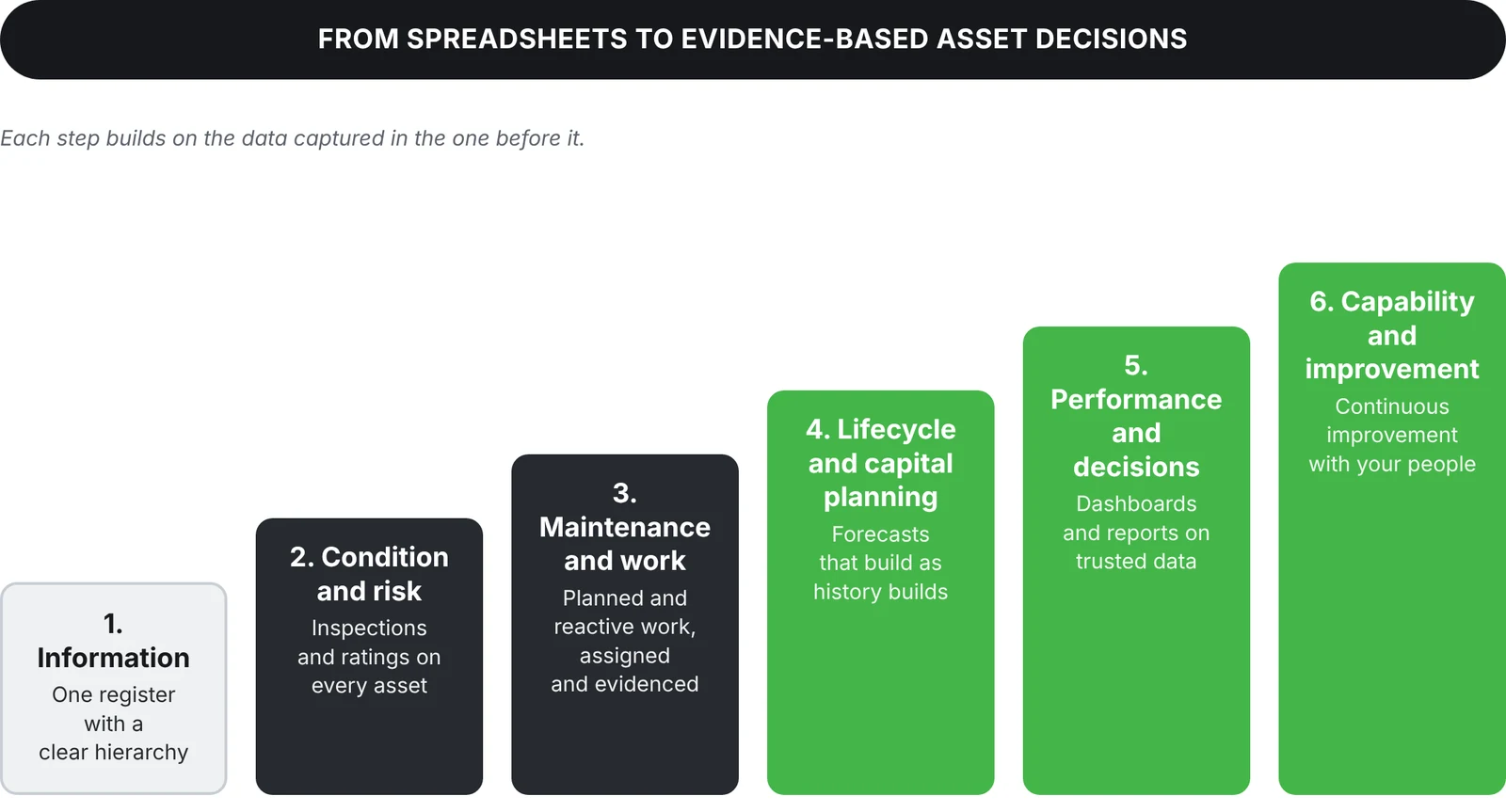
From spreadsheets to evidence-based decisions
The data your crews capture builds in stages. Information and a hierarchy come first, then condition and risk, then maintenance and work, and lifecycle planning, performance reporting and continuous improvement build on top. EXTAG supports asset managers working in line with the themes of ISO 55000.
How we work with you
Full-service, not self-service
EXTAG’s team administers the platform and makes configuration changes for you, so you don’t need to build or keep a specialist admin team. Platform knowledge stays with EXTAG, not with one or two of your staff.
Per solution, not per seat
EXTAG is licensed per solution with unlimited users, so you can add staff and contractors without increasing your licence cost.
Continuous improvement after go-live
See service and support for how we look after you after go-live.
The same cycle continues for the life of the service. Platform updates are tested and released continuously, and changes to your forms, tasks and reports are made in days, not months.
See EXTAG on your assets
Contact us to set up a live demo. We’d love to hear from you.